Talking to someone in another language on a call usually means long pauses while the software listens, types it out, translates the text, then reads it back. A new model from DeepL skips most of that relay — and the delay drops with it.
What happened
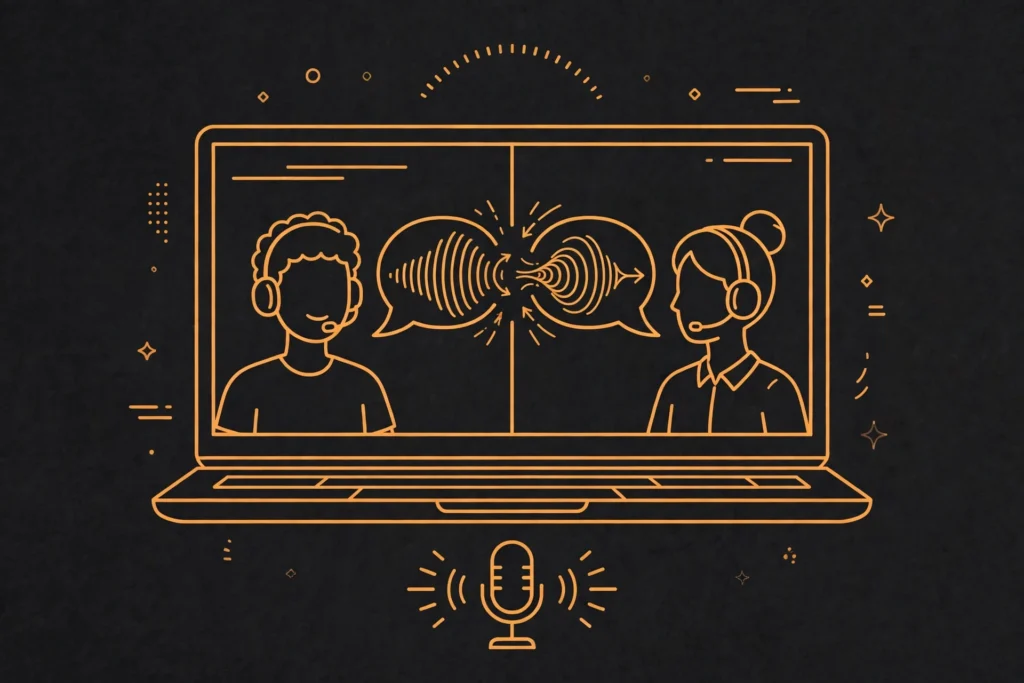
On November 26, 2026, DeepL launched Aure v2 at its Unmute Summit in Tokyo. Instead of three separate steps — transcribe the speech, translate the text, then generate new speech — Aure v2 translates directly from speech to speech in a single model. DeepL says that cuts the median translation delay by 50% compared with Aure, the first version released earlier in November. Those figures come from DeepL’s own internal tests, so treat them as the company’s claim for now.
Why it matters on a normal call
- Less waiting: half the delay means conversations flow more like a normal back-and-forth, not a walkie-talkie exchange.
- More natural voice: the model is built to keep the speaker’s tone, rhythm, and emphasis in the translated speech, not flatten everything into a robot voice.
- No new setup: if you already use DeepL Voice, Aure v2 switches on automatically for supported languages.
The practical details
- Languages at launch: English, German, French, Spanish, Japanese, and Korean — more are promised soon.
- Where it works: DeepL Voice for Online Meetings, DeepL Voice for In-Person Conversations, and the DeepL API for Voice.
- Who gets it: DeepL Voice customers, with the model enabled automatically — there is nothing to install or turn on.
Should you try it?
If you sit in meetings with people who speak another language, this is worth a test run. Book one short call, turn on DeepL Voice, and see whether the shorter delay makes the conversation easier to follow. If your language is not on the launch list yet, check back — DeepL says more languages are coming.
Source: DeepL introduces Aure v2, its fastest Voice AI translation model (PR Newswire, November 26, 2026)
Faster translation will not fix a bad microphone — but it does remove one of the biggest reasons live translated calls feel awkward.