Most AI models arrive as a black box: you can use them, but you can’t see how they were made. This week, Abu Dhabi’s Institute for Foundation Models (IFM) went the other way, releasing K2-Horizon — a family of six open AI models, published November 15–17, with the training data, checkpoints, and code included, not just the finished models.
What changed
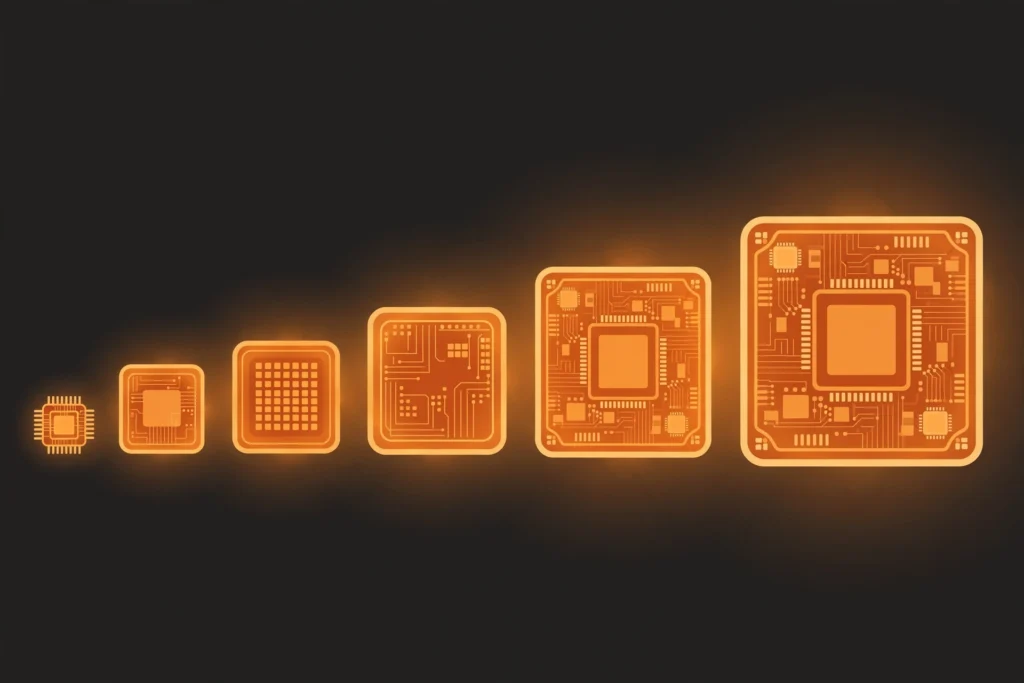
- Six sizes, one family: the lineup runs from a tiny 0.9B model meant for small devices, through 3.7B and 7B mid-size models and a 32B dense model, up to a 375B flagship. You pick the size that fits your PC, not the other way around.
- Open means the whole recipe: IFM says it released the training data, stage-by-stage checkpoints, logs, and training code — so anyone can check how the models were built, not just download them.
- Built for doing, not just chatting: the models are aimed at coding and agent-style work — tasks where the AI follows steps and uses tools. IFM also claims a speed add-on called Uno makes answers come up to 2.2× faster.
- Four models share one giant textbook: four of the six were trained on the same 22 trillion-token collection of text, which makes it easier to compare sizes fairly.
Try it like this
- Start small. If you want to experiment on your own PC, look at the 0.9B, 3.7B, or 7B sizes first — the 375B flagship needs a server room, not a laptop.
- Use a listed runtime. IFM names tools like Ollama, vLLM, and SGLang for running the models — Ollama is the simplest starting point for home users.
- Test it on your own tasks. Try a few real questions or coding jobs you already know the answers to, and see how the small model does before trusting it.
- Read the license on the model card before using it in a business project.
Good to know
- Benchmarks are the maker’s own: IFM says these models lead or match rivals at each size, but independent testing is still catching up. Treat leaderboard numbers as a starting point, not proof.
- Big models still need big hardware: “open” doesn’t mean “runs on anything” — the larger sizes need serious graphics cards or a rented server.
Source: explainx.ai — K2-Horizon Open Models: 375B MoE + Full Data (Nov. 17, 2026)
The tip: when a new AI model drops, check the smallest size first — a model that runs on your own PC, with its recipe published, is the one you can actually learn from.